The Farm Year
January & Febuary
At the start of La Tuilerie’s farm year we’re deep in our mid winter season. Our sheep are wintered outside to ensure they stay fit and healthy. Rest assured their wool gives them good protection against the cold.
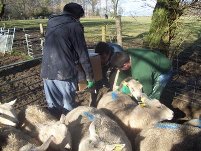
At the end of January we have the sheep examined with an ultrasonic scanner to tell us how many lambs each ewe is carrying. This helps us feed the sheep more accurately. A sheep carrying just one lamb will need hardly any extra feed, whereas a sheep carrying twins or triplets will need a kilo of concentrate feed each day by the time she gives birth.
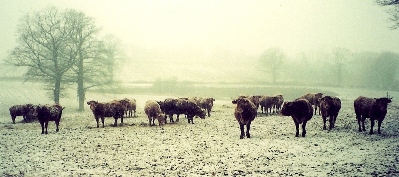
Cows don’t enjoy severe weather. If they are kept outside they require double the amount of food just to keep warm. At La Tuilerie, we over-winter our cows in a shed ensuring we can monitor them properly at calving.
March & April
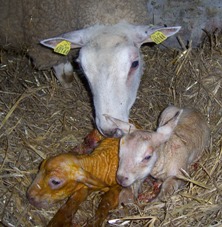
March and April are when all our lambs and calves are born. We work long hours to watch the safe delivery of all the new-borns. The sheep come into the lambing shed to give birth but once the lambs are strong and feeding well, their mothers go back outside where they can eat lots of spring grass, essential for good milk production.
May & June
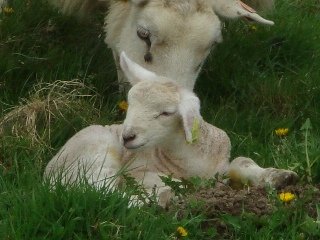
When the weather warms up, all our animals are outside and work on the farm turns to making hay and silage for the winter. Our campsite visitors start to arrive and work in the vegetable garden increases.
July & August
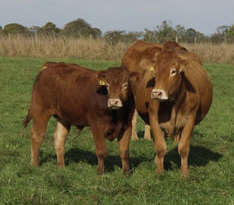
During the summer all the livestock are outside eating grass and the farm takes on a calm, relaxed atmosphere. We start to sell our first spring lambs in July.
September & October
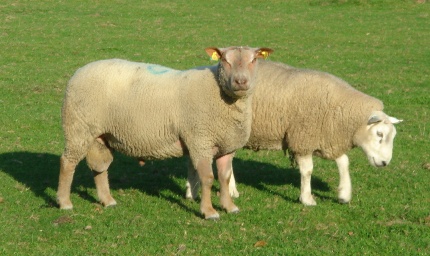
This is a fantastic time of the farm year, the weather is still hot, but not as intense as in the summer. The light and colours are clear and bright. We make a second harvest of silage.
November & December
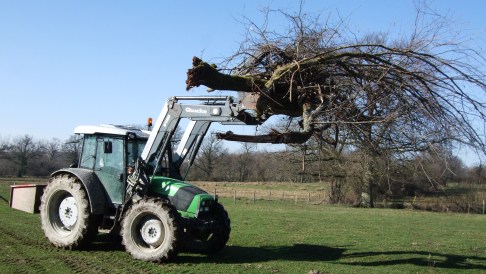
As the weather turns wetter, the rams go back with the sheep and the cows come inside. We also start to sell the biggest of our calves. The calves we don’t sell straight away, we house and grow on a bit longer for selling in January. Now that the cows are inside, it’s a good chance to mend or renew fences, tidy up fields and spread manure.




What's new


-
agritourisme en limousin, le camping comfortable, la cuisine française
May 10, 25 02:23 AM
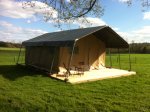 Une véritable exploitation agricole qui vous propose l’hébergement insolite, et la cuisine maison. Agritourisme en Limousin propose la nature, les randonnées, le cyclisme et l’alimentation.
 -
Limousin farm holidays for comfortable camping, french food and the outdoors
May 10, 25 02:22 AM
A real working Limousin farm offering interesting accommodation, home cooking & a chance to connect with nature. Limousin farm holidays offers nature, walking, cycling & eating. -
Closed for 2024 / Fermé pour 2024
Mar 09, 24 07:56 AM
 "We are closed for the 2024 season. We will reopen for bookings in Autumn 2024 for our 2025 summer season. "Nous sommes fermés pour la saison 2024. Nous rouvrirons aux réservations à l'automne 2024 po…
